Sandalwood oil in a face oil for men
Santalum Spicatum Wood Oil · essential oil · 0.7% of the formula, within the 2.0% blend
The sandalwood in this face oil is Australian sandalwood, printed on the label as Santalum Spicatum Wood Oil. It is 0.7% of the bottle: the largest share of the 2.0% essential-oil blend, and still under one percent of the whole.
It adds scent and nothing else: the warm, dry, woody note that arrives last and leaves last. The carrying is done by jojoba oil, 82.5% of the bottle.
By Jon Gore, founder, Berlin · Last reviewed
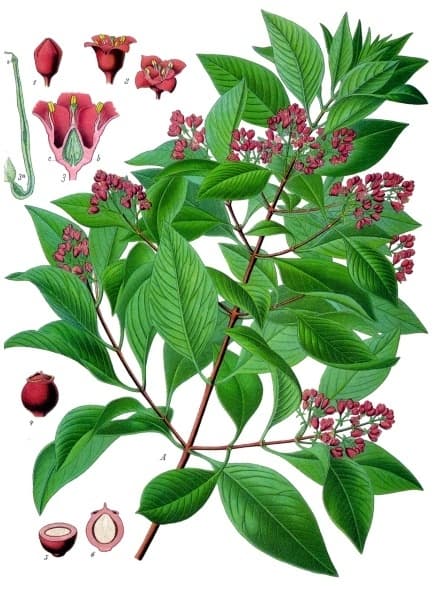
What is Australian sandalwood oil?
An essential oil from the wood of Santalum spicatum, the Australian sandalwood: "Wood Oil" in the INCI name says which part of the tree. It is drier and quieter than Santalum album, the Indian sandalwood the perfume trade made famous. With sandalwood the species is not a detail, which is why the label prints it.
In the blend it is the low, warm note: the part of the scent that reads as finish rather than fragrance. How ours was distilled is not on file yet; the certificate of analysis will say, and this sheet will repeat it then.
What does 0.7% mean?
0.7%, the largest share inside the 2.0% blend and still under one percent of the bottle. At that dose sandalwood seasons the oil; it does not perfume the man.
Above it on the label sit jojoba and rosehip seed oil at 15%, the two oils that make up 97.5% of the bottle. Below it come the rest of the blend, starting with lavender oil at 0.4%.
Essential oils are the seasoning, not the meal. A formula that leads with them is a fragrance wearing skincare's clothes.
What does sandalwood do in this bottle?
| Aspect | In this bottle |
|---|---|
| Scent | Warm, dry, woody, and low by design. Present when your hands pass your face, absent across a table. |
| Proportion | 0.7% of the formula. Enough to be the finish; never enough to be the point. |
| Species | Spicatum, printed on the label. Not album, which is a different tree with a different history. |
Everything here is sensory or compositional. None of it is a medical claim: none may be made, and none is needed.
What does it not do?
Does not project.
Does not follow you into meetings.
Does not make the oil sacred.
Is not incense, a mood, or a therapy.
A good smell at an honest dose. Anything more would be a sermon. A cosmetic oil is not a treatment; for any skin condition, see a doctor or a pharmacist.
Where does it come from?
Santalum spicatum grows in Western Australia.
[ Distiller and certificate of analysis pending. Until they are on file, the species and the country are the only provenance printed. ]
What does "sustainably sourced" mean on a label?
There is no standard behind the phrase and no test to fail. Ask instead for the species and the country. With sandalwood that is where the ethics live, which is why both are on this label.
Questions
- Does it smell of roses?
- No. Refined rosehip seed oil smells of very little. The scent comes from sandalwood, lavender, frankincense, cedar and tea tree, 2% together. Why rosehip seed oil has no rose scent
- What won't it do?
- A cosmetic oil is not a treatment, and we make no promise about any skin condition. For those, see a doctor or a pharmacist. What jojoba oil does not do