Rosehip oil in German: Hagebuttenkernöl, Wildrosenöl, Rosenöl
For the English speaker standing at the dm shelf.
In German, rosehip seed oil is Hagebuttenkernöl; Hagebuttenöl and Wildrosenöl are, nearly always, the same oil under other names. Rosenöl is something else entirely: an essential oil distilled from rose petals.
Whatever the front of the bottle says, the Latin on the back settles it: Rosa ... Seed Oil is the oil from the seed.
By Jon Gore, founder, Berlin · Last reviewed
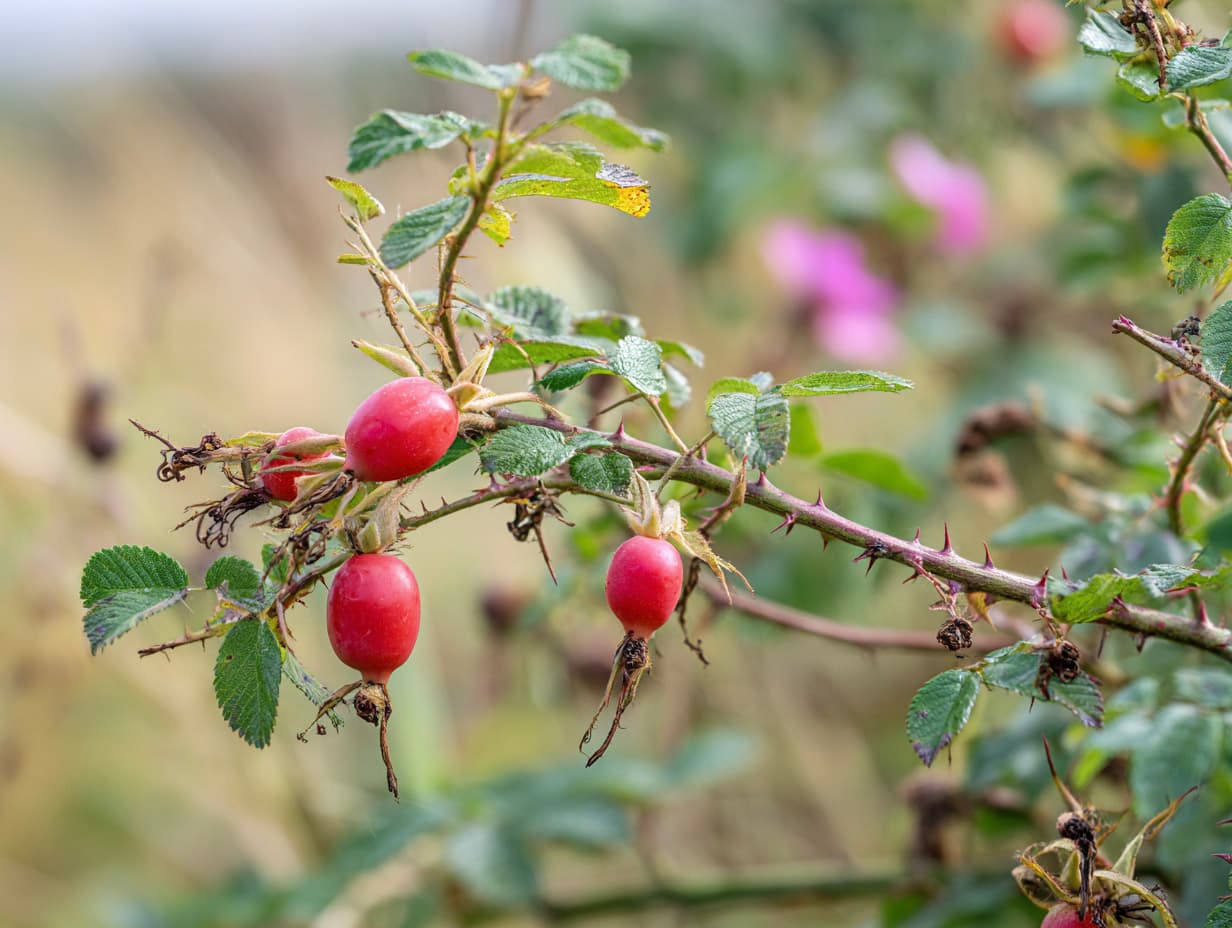
In short: three names, two oils, one essential oil
Three names. Hagebuttenkernöl, Hagebuttenöl and Wildrosenöl all mean oil pressed from the seeds of wild-rose hips; German Wikipedia files all three under one article. Taken apart, the words are kind: Hagebutte is the rosehip, Kern the seed, Wildrose the wild rose, Öl the oil.
Two oils. The seed oil, and a less common oil named for the whole fruit, which some bottles also call Hagebuttenöl. Only the ingredient list tells them apart.
One essential oil. Rosenöl is distilled from the petals of the damask rose. It is a perfume material, sold by the millilitre at a price to match, and it is not what you want if you came for rosehip oil.
"Have you looked for Wildrosenöl in drug stores? It's the same as Hagebuttenöl/rosehip oil, even if it doesn't sound that way at first." A reader on r/EuroSkincare, and correct.
Which German name is which oil?
| On the bottle | What it is | Species | Part of the plant | Method | INCI on the back |
|---|---|---|---|---|---|
| Hagebuttenkernöl | Rosehip seed oil | Mostly Rosa canina, the dog rose; also R. rubiginosa, R. moschata | Seeds | Pressed or extracted, often refined | Rosa Canina Seed Oil, or the species used |
| Hagebuttenöl | Usually the same seed oil; sometimes oil from the whole hip | Mostly Rosa canina | Seeds, or the fruit with its seeds | Pressed | Rosa Canina Seed Oil, or Rosa Canina Fruit Oil |
| Wildrosenöl | The same seed oil, under a prettier name | Rosa canina; Rosa rubiginosa (Wein-Rose) | Seeds | Pressed | Rosa Canina Seed Oil or Rosa Rubiginosa Seed Oil |
| Rosa Mosqueta | Seed oil from the wild roses of the southern Andes | Mostly Rosa rubiginosa; often sold as Rosa moschata | Seeds | Pressed | Rosa Rubiginosa Seed Oil or Rosa Moschata Seed Oil |
| Rosenöl | Rose essential oil, a perfume material | Rosa damascena; also R. centifolia | Petals | Steam-distilled | Rosa Damascena Flower Oil |
How do you recognise rosehip oil on a German label?
Turn the bottle round. The front is marketing, in German, English or neither. The ingredient list on the back is in INCI, the standard naming every cosmetic sold in the EU uses, and it is never translated: it reads the same in Berlin as in Dublin.
Read each name in three parts: the plant (Rosa canina, Rosa rubiginosa, Rosa moschata), the part of it (Seed, Fruit, Flower), and what was made from it (Oil, Extract). Ingredients are listed in descending order of weight. A pure oil has one line; if Rosa ... Seed Oil comes second or fifth, it is an ingredient, not the product.
- Rosa Canina Seed Oil: dog-rose seed oil, the classic Hagebuttenkernöl.
- Rosa Rubiginosa Seed Oil or Rosa Moschata Seed Oil: the seed oil of other wild roses, often the Andean rosa mosqueta.
- Rosa Canina Fruit Oil: an oil named for the whole fruit; see below.
- Rosa Damascena Flower Oil: rose essential oil, Rosenöl. Scent, not rosehip.
- A carrier oil such as Helianthus Annuus Seed Oil followed by a Rosa ... Fruit Extract: hips steeped in another oil, sold as a Hagebutten-Ölauszug.
Rosehip seed oil or rosehip oil: what is the difference?
In English, "rosehip oil" is mostly shorthand for the seed oil, and in German so is Hagebuttenöl. The difference worth knowing is seed oil against fruit oil. Seed oil is pressed from the small hard seeds inside the hip. Rosa Canina Fruit Oil is named for the fruit: some suppliers use it for oil from the hip with its seeds, some for what is in practice a seed oil. The INCI word alone does not settle which.
So the plain rule: Seed Oil tells you exactly what you have; Fruit Oil tells you the rose but not quite the part. Neither is a scandal. It is worth knowing which you are buying, and worth reading the order, because some face oils sold on the word "rosehip" list a different oil first.
Neither is a vitamin C product, whatever the fruit's reputation: vitamin C dissolves in water and stays out of the oil.
Rosa moschata or Rosa canina: does the species matter?
Rosa canina, the dog rose (Hundsrose), is the common hedge rose of Europe and the source of most German Hagebuttenkernöl. Rosa rubiginosa, sweet briar or Wein-Rose, is a European wild rose whose leaves smell of apples; it has run wild in southern Chile and Argentina, where its hips are harvested as rosa mosqueta. Rosa moschata, the musk rose (Moschus-Rose), is an old garden species, known mainly from cultivation, and a parent of the damask rose that gives Rosenöl.
The trade name and the botany do not line up neatly: Andean seed oil is sold as Rosa Moschata Seed Oil as well as Rosa Rubiginosa Seed Oil. For your face the species matters less than the label makes it look. All three give a seed oil of the same kind, rich in linoleic and linolenic acid; the details vary with species, harvest and refining.
What is in our bottle?
Rosa Moschata Seed Oil, 15%, second on the label after Simmondsia Chinensis Seed Oil (jojoba, 82.5%). In German we call it Hagebuttenkernöl der Moschusrose. It is refined, so it smells of very little; the scent comes from a 2% blend of five essential oils, and there is no Rosenöl in it. Supplier country and pressing method are not on file yet; we print them when the certificates of analysis are.
Why it is there at all, and why only 15%: what rosehip seed oil does in a face oil. Why it shares the bottle with jojoba: jojoba vs rosehip oil, and why both.
What is jojoba oil called in German?
Jojobaöl, which is the easy one. The INCI is Simmondsia Chinensis Seed Oil on every label. German bottles sometimes add flüssiges Wachs, liquid wax, which is accurate: jojoba is mostly wax esters, not a triglyceride oil. The rest of that story is on the sheet for jojoba oil, Jojobaöl.
The words around both oils on a German label:
- kaltgepresst: cold-pressed.
- nativ: virgin, unrefined. Unrefined jojoba is golden and smells faintly nutty.
- raffiniert: refined. Refined jojoba is colourless and has next to no smell.
- bio, or kbA (kontrolliert biologischer Anbau): from certified organic farming.
- Basisöl or Trägeröl: base or carrier oil, a pure oil to use as it is or to mix.
- Gesichtsöl, Körperöl, Pflegeöl: face oil, body oil, care oil.
- ätherisches Öl: essential oil. Concentrated, and meant to be diluted.
- Duftöl: fragrance oil, often synthetic. Not a skin oil.
Where are rosehip and jojoba oil at dm and Rossmann?
Look for the words, not a brand. Pure plant oils usually sit in the Naturkosmetik section, or among face care (Gesichtspflege) as Gesichtsöl; some are shelved with body care as Körperöl or Pflegeöl. Rosehip may wear any of its three names, so check the INCI rather than the front. Pharmacies (Apotheke) sell pure jojoba and rosehip oil too, and you can ask to be advised (sich beraten lassen).
Shelf layouts change from branch to branch, and we have not checked any particular product or price, so take this as the words to look for, not a map. Searching the German name on the chain's website before you go saves standing at the shelf with a translation app.
"My Germans not good enough to tell if I'm buying the right thing." (r/germany). The INCI list is in the same Latin for everyone; that is its one kindness.
Ours is on neither shelf. The Moisturising Elixir is sold only on this site and shipped within Germany, so there is no dm version to hunt for. If the reason you are at the shelf is the water and the heating, dry skin after moving to Germany is the longer answer.
Questions
- Hagebuttenkernöl, Wildrosenöl, Rosenöl: what is the difference?
- Hagebuttenkernöl and Wildrosenöl are German names for oil pressed from wild-rose seeds; Rosenöl is an essential oil distilled from petals. Ours is Rosa Moschata Seed Oil, 15% of the bottle.
- Does it smell of roses?
- No. Refined rosehip seed oil smells of very little. The scent comes from sandalwood, lavender, frankincense, cedar and tea tree, 2% together. Why rosehip seed oil has no rose scent
- Where can I buy it? Is it at dm?
- Only here, shipped within Germany. No shop shelf, no marketplace.
Sources
- Hagebuttenöl: Hagebuttenkernöl and Wildrosenöl as one oil; pressing, extraction, refining. Wikipedia (de).
- Hundsrose (Rosa canina): hips used for Hagebuttenöl; vitamin C in the fruit wall. Wikipedia (de).
- Wein-Rose (Rosa rubiginosa): hips pressed for Wildrosenöl. Wikipedia (de).
- Rosa rubiginosa: sweet briar, naturalised in southern Chile and Argentina. Wikipedia (en).
- Rose seed oil: Rosa rubiginosa as rosa mosqueta; fatty acids. Wikipedia (en).
- Rosa moschata: the musk rose, parent of the damask rose. Wikipedia (de).
- Rosa moschata: origin, cultivation, seed oil. Wikipedia (en).
- Rosenöl: steam-distilled from the petals of Rosa damascena and R. centifolia. Wikipedia (de).
- Rose oil: an essential oil from rose petals. Wikipedia (en).
- Vitamin C: a water-soluble vitamin. Wikipedia (en).
- Jojoba oil: wax esters; refined and unrefined. Wikipedia (en).